Introduction
The title Keresd a szíved (Search Your Heart), which sounds like something from a tabloid, is not the name of a modern South American soap opera or a new dating service, nor does it refer to the unexpected infatuation of the seventy-two-year-old Mór Jókai (1825–1904) with Bella Nagy, the eighteen-year-old actress who later became his second wife, but rather the first stage adaptation of the literary giant’s novel A kőszívű ember fiai. Jókai made the stage version himself, which isn’t surprising: besides his personal connections—his wives, actresses Róza Laborfalvi and Bella Nagy—it is worth mentioning that as a young writer, he lived with the Szigligetis; he adapted eleven of his own works, short stories and novels, for the stage (Szalisznyó 2023b, 68), but during his lifetime, several others also adapted his stage works (for example, Ede Szigligeti) (see Szilágyi 2023, 8, in the preface).
The premieres of his novels usually took place at the National Theatre (he rewrote his short stories for theatres that staged more entertaining performances, which shows the theatrical diversity of Budapest, which had grown into a cosmopolitan city at the time), yet the premiere of Keresd a szíved took place at the Budai Nyári Színkör (Buda Summer Theatre Group) in Krisztinaváros, a seasonal theatre, on 25 April 1896, after a ten-year wait (Szalisznyó 2023a, 694).
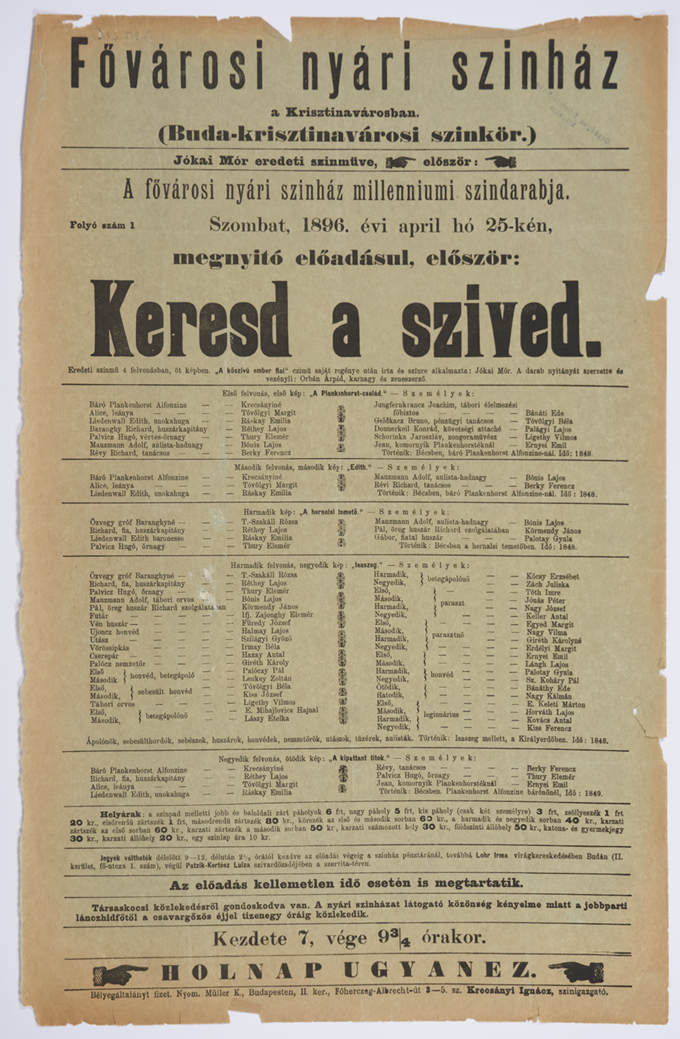
Picture 1. The programme of Keresd a szíved, 1896 (OSZMI Theatrical Posters and Small Prints Archive)
How is it possible that the internationally renowned Hungarian writer of the era, whom Crown Prince Rudolf considered a friend, who was received by Bismarck, the “Iron Chancellor” during his visit to Berlin (and what is more, Jókai even interviewed him—to which the contemporary satirical magazine Borsszem Jankó responded with a caricature, and events related to the prince of writers, such as his marriage to Bella Nagy, were regularly reported in major international newspapers such as The New York Times), who was a creative partner of Ferenc Liszt, Ferenc Erkel, and Richard Strauss (A cigánybáró [The Gypsy Baron], premiered in 1885, is still a popular operetta on international stages; see Hansági 2020, 51–54) could not get into the National Theatre with the stage version of A kőszívű ember fiai?
The cancelled premiere at the National Theatre
This is particularly interesting in light of the fact that Jókai began the adaptation of his 1869 novel around the time when the adaptation of Fekete gyémántok (Black Diamonds) began playing at the National Theatre on 9 October 1885, and Az arany ember (The Man with the Golden Touch), which premiered there on December 3, 1884, had already achieved overwhelming success by then (Szalisznyó 2023a, 691). Moreover, the National Theatre had already staged ten other works by Jókai before Az arany ember (Szalisznyó 2023b, 71). In any case, it can be concluded theatrical performances of the author’s works greatly contributed to the success of the “Jókai phenomenon” at the time.
On 10 October 1885, the pro-government political newspaper Nemzet reported that Mór Jókai was “working on a new play. The title of the play is ‘Keresd a szíved,’ and the author will submit it to the National Theatre later this season. In his new play, Jókai has intended the two leading female roles for Prielle Kornélia and P. Márkus Emilia.”[1]
The writer finally submitted the adaptation to the “committee deciding on stage suitability” on 16 May 1886. In June, the four reviewers, Károly Vadnay, József Szigeti, Gergely Csiky and Béla Bercsényi, together with director Ede Paulay, recommended the play for performance by secret ballot with a vote of 3 to 2 (Szalisznyó 2023a, 692). Preparations for the premiere, however, did not begin, as the intendant, Count István Keglevich, a loyal aristocrat, did not dare to take on the premiere for political reasons, and after more than a year of procrastination, he informed Jókai of his decision in a private letter dated 28 August 1887. This was reported by several daily newspapers in the first half of September 1887—probably on the initiative of Jókai, who was also the editor of the Nemzet (Szalisznyó 2023a, 692): “I regret to tell you frankly that I cannot perform the play ‘Keresd a szíved’ at the National; I do not consider it timely to stage a play about Austro-Hungarian conflicts as long as the generation that is always ready to protest is alive and as long as the same person by whose orders those things happened still reigns. I would not wish ever to be in a position where I should be obliged to ask the king, if he should happen to feel like going to the National, not to do so. I am sorry that I cannot grant your wish, but I cannot act against my convictions” (quoted in Győrffy [ed.] 2004, 143).
It is sad to note that nearly forty years after the War of Independence and twenty years after the Compromise, it was still not possible to talk about the events of 1848/1849 from a “Hungarian perspective,” or at least without the threat of censorship, even for Mór Jókai. This delicate theatrical episode highlights that the “ostensible freedom” of the dualist “forced marriage” raised many dilemmas and fundamentally limited the consolidation of a healthy and unified national identity, and it is no coincidence that the Compromise is still controversial today. (Unfortunately, Lajos Kossuth’s Cassandra-levél [Cassandra Letter] foreshadowed many things.)
But let us return to Keresd a szíved. Count Keglevich was strongly criticised by Mikszáth Kálmán under the pseudonym Scarron for his rejection of the play (Szalisznyó 2023a, 693), and the contemporary satirical papers almost pilloried the Intendant of the National Theatre, as can be seen in the “Intendant’s Correspondence” published in the 11 September 1887 issue of the contemporary satirical paper Borsszem Jankó: “Intendant’s correspondence. I. To Mr. Mór Jókai, locally. Your play ‘Keresd a szíved,’ which was accepted by the Drama Assessing Committee, can be made into a pickle. I don’t need it. The title is absurd, the content is rebellious. There’s no ballet in it either. As Imperial and Royal Intendant, I therefore order you to take back this dramatic riddle and study natural history for a year at a public school so that you may learn where the human heart lies. Yours truly, Count Keglevich.” Later, József Katona was addressed in the same style by Count Borsszem Jankó Keglevich, Lunatic Imperial and Royal Theatre Intendant: Listen, sir, how dare you write that bloody-mouthed play called ‘Bánk bán?!,’” then Mr. Victor Hugo was mentioned as a “dangerous agitator, swashbuckler, atheist,” and Mr. Friedrich Schiller, who, regarding Don Carlos, should “Get a grip […] and better himself. Take back your play and rework it in a legal sense…”, and finally, in the context of his regicides, William Shakespeare was also mentioned: “…stop, you rascal! At 11 tomorrow morning, report to my office, where the wooden horse will be waiting for you. Twenty-five to the appropriate place, burning the works you spat—that will be your punishment. From now on, I will write the plays for the national theatre myself. That will be quite something! Keglevich etc. etc.”[2]
In response to the media scandal that erupted, the Count-intendant of the National Theatre agreed to the premiere with an ambivalent decision, but did not commit to a date (Szalisznyó 2023a, 694). Surprisingly, the 11 January 1888 issue of the Pesti Napló reports, “We have been informed that Mór Jókai himself is currently opposed to the performance of the play Keresd a szíved, as the antecedents of this play could still link the production of the play to political interpretations, which are not appropriate in the current circumstances, given the state of war.” As regards the war situation at that time, Jókai may have been referring to the clashes between the Monarchy and the Russian Empire in Galicia (Szalisznyó 2023a, 694).
We know from a letter written by Jókai in 1887 (Győrffy 2004, 154, 208) that Lajos Evva, director of the Népszínház Theatre in the capital, offered to stage Keresd a szíved, but no further reference to this can be found later, nor is there any other documentation of interest from other theatres at that time. An interesting side note related to our topic is Jókai’s occasional play, Jószívű ember (The Kind-Hearted Man), which was performed by the National Theatre on 31 May 1889, as part of the celebrations of the Kind-Hearted Movement, but was never staged again (Győrffy 2004, 510).
The ten years that passed before the play appeared on stage were probably spent searching for a favourable social climate and a suitable theatre venue, an opportunity that was created by the millennium.
The stage version
What does drama history say about Jókai’s self-adaptation? “The four-act play Keresd a szíved was adapted from A kőszívű ember fiai. […] The adaptation from the novel was quite successful in this case as well. Although it retained some epic character, it generally became a fresh and lively stage work. […] The main value of the play is its sharp dialogue, which works so well on stage,” we learn from Sándor Galamb’s work A magyar dráma története 1867-től 1896-ig (The History of Hungarian Drama from 1867 to 1896), which, among works dealing with the theme of 1848, places the play in the category of “historical works with serious literary intent” alongside Ede Szigligeti’s Az üldözött honvéd (The Persecuted Soldier) and Miklós Komoróczy’s Márciusnak idusa (The Ides of March), as opposed to “spectacles intended purely for entertainment” (Szalisznyó 2023a, 691). Berta Vnutskó, in her 1914 book on Jókai’s dramatic work, however, argued that the adaptation “[did] not provide the same harmonious effect as the novel. It lacks the powerful underpinnings that makes A kőszívű ember fiai such an excellent work, despite its excesses” (Vnutskó 1914, 56).
It may seem to us that the “complex political situation” of the time may have finally manifested itself in a kind of voluntary, internal censorship in Keresd a szíved. This may also be indicated by the fact that in the “freedom fighter” plays of the period the identity of the enemy facing the defenders is often uncertain (Szalisznyó 2023a, 696). And while the novel was written in 1869, amid the political struggles following the Compromise, and clearly advocated independence, the adaptation ends with a happy ending: Hugó Palvicz survives and marries Alice Plankenhorst at the end of the play. Yes, Hugó, because this name change catches our eye on the poster for the performance, and Jókai even changed the Baradlay family to Baranghy and Hugó Mausmann to Adolf (Szalisznyó 2023a, 695).
And although it may seem surprising, the name change was one of the author’s adaptation techniques. The reason may be that in the course of dramatisation “a character’s function, fate, and identity change, the new name helps to better distinguish between the characters in the novel and those on stage” (Szalisznyó 2023a, 695).
The programme, which I found in the programme archive of the Hungarian Theatre History Museum and Institute, reveals that the story takes place in three locations: in the Plankenhorst House in Vienna, in the cemetery of Hernals and in the Királyerdő forest near Isaszeg. The play has a total of twenty-one speaking characters, with extras including nurses, stretcher-bearers, surgeons, hussars, soldiers, national guardsmen, sappers, gunners, and aulists. This is therefore a large-scale production, although little is revealed about the family in the play, with only the mother appearing on stage apart from Richárd.
Thus, by highlighting the heroic figure of the hussar captain Richárd Baranghy, the spirit of the Hungarian War of Independence is strongly present in the stage version, even symbolically, while the audience is presented with a much more rounded story than in the original novel.
For me, Tallérossy Zebulon—who interestingly appears in Jókai’s play Barangok (The Barangs), written for the opening performance of the Vígszínház (May 1, 1896)—is conspicuously absent from the stage adaptation of Jókai’s self-adaptation, and so do the humorous elements, the author’s linguistic playfulness that permeates the novel, as well as the other minor characters, such as Ádám Mindenváró, Gergő Boksa, and Mihály Szalmás. It seems to me that the “guiding spirit” of the original story, Mrs. Baradlay, or Mrs. Baranghy, is less central to the play. And although at the end of the novel there is a palpable desire on the part of the author to turn the national and family catastrophe into a story with a happy ending, the performance of Keresd a szíved presumably retained little of the angst- and fear-filled world vision of A kőszívű ember fiai, thus bringing it closer to a romance (Nyilasy 2003, 68), which may also explain the choice of title.
The premiere
The premiere took place on 25 April 1896, as the opening performance of the season at the Budai Nyári Színkör (Buda Summer Theatre Group), which operated seasonally in Krisztinaváros from April to November. According to letters written by the author to the theatre director, Ignác Krecsányi, he participated in the finalisation of the stage texts and the adaptation of the play for the stage (Szalisznyó 2023a, 694). And from Krecsányi’s letter to the author at the end of the year (OSZK, Manuscript Archives, Correspondence Repository) we can learn how much he liked the choice of title, “‘Keresd a szíved’! How much poetry there is in the title itself! And then he gets into the play!”
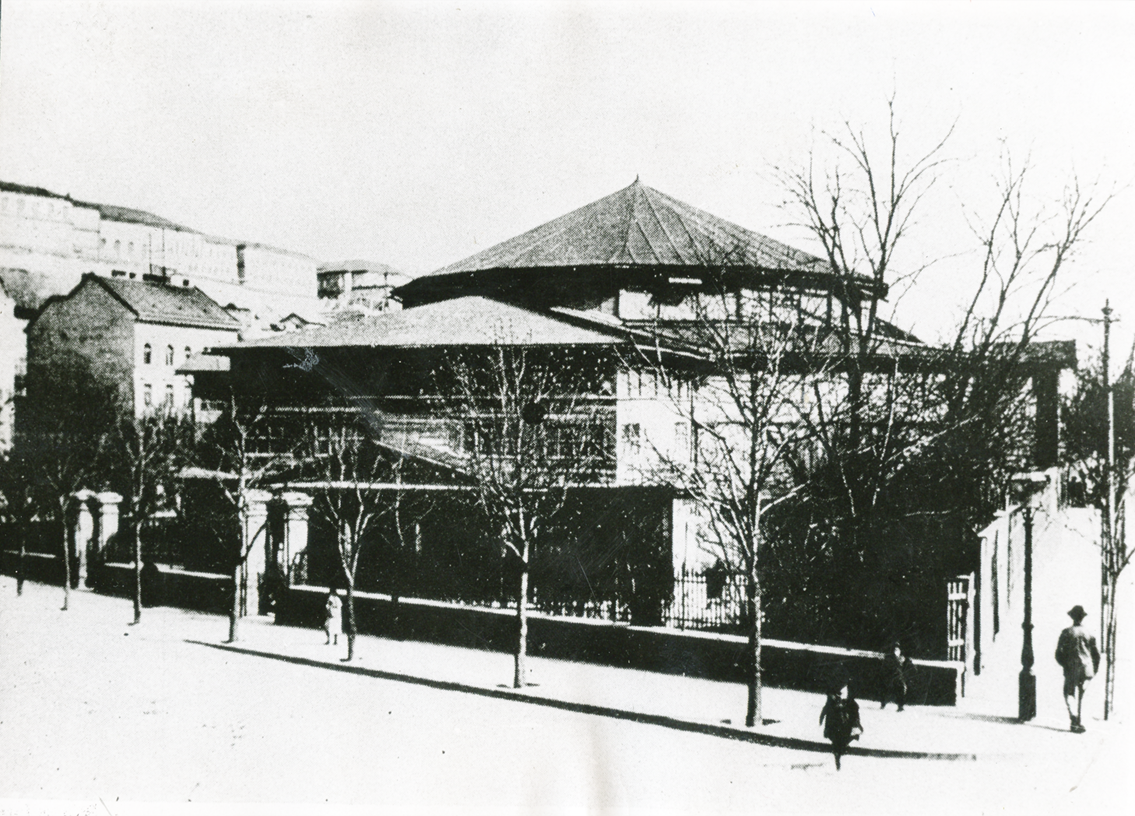
Picture 2. Budai Nyári Színkör (Buda Summer Theatre Group), end of the 1800s (OSZMI Photo Library)
Jókai appeared at the premiere as usual, then complained in a letter to the theatre director the next day that he had caught a cold, even though he had been wearing a winter coat and hat. In this letter of 26 April 1896 (preserved in the Letter Repository of the Manuscript Collection of National Széchényi Library, OSZK), we also learn that he expressed his gratitude to the artists for their “high-standard excellence” in the show. “Let nothing harm them in this cold theatre, which is warmed only by the enthusiasm of the audience!” On the evening of April 25, it may have still been cool for such a long outdoor production, but as we can read at the bottom of the programme, “The performance will be held even in inclement weather.”
Another interesting detail on the programme is that Baroness Plankenhorst Alfonsine was played by Mrs. Krecsányi, i.e. the director was biased towards casting his actress-wife.
In connection with the rehearsal process, we can mention as a novelty and unusual event at the time, quoting the contemporary press, “that the theatre company held a dress rehearsal in front of a small circle of people.”[3]
The Budai Nyári Színkör (The Buda Summer Theatre Group)
Where is the Budai Nyári Színkör located and what role did it play in Hungarian theatre history? The management of the theatre company, created in 1838 by the German theatre director Philip Nötzl from Timișoara and Sibiu, together with Ignác Huber, erected a wooden building for the theatre in 1843 in the Horváth Kert in Krisztinaváros (Székely [ed.] 1994). The Horváth Garden, in the area bounded by today’s Alagút Street—Krisztina Boulevard—Attila Street, was owned by a landowner named Horváth in the 18th century, hence the name (Németh 1930, 104). Until 1870, they played in German in the 1,200-seat arena designed by Ferenc Ságody, called the ‘Ofner Tagstheater in der Christinenstadt.’ Between 1895 and 1915, the theatre operated under the name ‘Fővárosi Nyári Színkör’ (‘Capital City Summer Theatre Group’), and between 1915 and 1937, it was known as ‘Budai Színkör’ (‘Buda Theatrical Circle’; Székely [ed.] 1994). The building was demolished in 1937 and Miklós Ligeti’s statue of Déryné (Mrs. Déry) was erected in its place.
Among the many theatre companies and theatre people who worked there, György Molnár stands out, having experimented with Hungarian performances as early as 1861. In 1868, he included the mortars of Gellért Hill and Hungarian army veterans in his large-scale spectacle entitled Bem apó (Father Bem; Saly 2005, 162).
One of the most important theatre makers was the aforementioned Ignác Krecsányi, who worked as an excellent director in several theatres. He began his acting career with György Molnár and “will be credited with the Hungarianisation of the audience in Krisztinaváros” (Schöpflin 1929–1931, I. 245), as the population of the district was still predominantly German-speaking at that time. He managed the seasonal venue twice, in 1883 and from 1888 to 1915, while also serving audiences in Arad and Timișoara with his company. The premiere of Keresd a szíved took place during his second term as director, in 1896.
The talented director began to consistently develop an increasingly valuable dramatic programme, and the repertoire, which consisted predominantly of folk plays and operettas, was supplemented with classical and contemporary Hungarian and foreign plays such as Csongor és Tünde (Csongor and Tünde), Jókai’s adaptation of Fekete gyémántok and a series of Shakespearean productions. And it was there that Mari Jászai performed “Medea,” and that Rostand’s Cyrano de Bergerac, Gorky’s The Lower Depths, and Ibsen’s Nora were first performed in Budapest. The repertoire also included opera performances (Székely [ed.] 1994, 118–119).
From 1915, Géza Sebestyén took over the position of his renowned predecessors. In 1925, he completely renovated the theatre at his own expense, which then became a permanent theatre under the name Buda Theatre Group (Budai Színkör), meaning that performances could also be held in the building during the winter (Schöpflin 1929–1931, I, 245). Under his direction, the summer productions consisted of revue operettas centred around individual stars, while contemporary Hungarian plays made up the rest of the repertoire, from Sándor Bródy to Menyhért Lengyel and Dezső Szomory. One of the most popular actresses at the summer theatre, among the many popular prima donnas, was Mici Haraszti, who even had a liqueur named after her at the Philadelphia Café opposite the theatre.
The Millennium Season
Let us examine the Millennium season of 1896 of the Buda Summer Theatre Group (Budai Nyári Színkör), then known as the Capital City Summer Theatre (Fővárosi Nyári Színház), which opened on 25 April with Mór Jókai’s play Keresd a szíved. According to the programme, the operetta La Duchesse de Ferrare was staged on 29 May, and on 22 June Lujza Blaha made her first guest appearance in the award-winning folk play Télen (In Winter), written by József Bokor Jr. The poster of the performance tells us that “the nation’s nightingale” appeared in Szólimondó asszonyság (Madame Sans-Gêne) the following day. On 13 July 1896 the French four-act play A vasgyáros (The Iron Master) was performed, followed by Feydeau’s comedy Csak párosan (L’Hôtel du libre échange) on July 28, and then the now forgotten popular theatre prima donna, Ilka Pálmai, performed Offenbach’s operetta Szép Heléna (La Belle Hélène). As we can see, the aim was primarily entertainment this summer, too, and only Jókai’s “romanticised” play was performed as a “serious” Hungarian work reflecting on the Millennium, the thousand years of national history.
Afterlife
Keresd a szíved did not have a great stage career. It was performed ten more times that season at the Budai Nyári Színkör, and although Ignác Krecsányi was enthusiastic about the play and also staged it in Timișoara in 1896, where he was also the director, it was not produced again in the capital and was rarely performed in provincial theatres. However, Director Krecsányi wrote about the reception in Timișoara in a letter to Mór Jókai dated 16 December 1896 (OSZK Kézirattár, Levelestár – Manuscript Archives, Correspondence Repository): “…no drama in Temesvár [Timișoara] has enjoyed such widespread success and enthusiasm for many years as ‘Keresd a szíved.’ May God grant that Your Grace enrich our literature with at least twenty more such excellent plays!” It is worth noting here that in their correspondence that year they repeatedly referred to the possibility of further collaboration and even planned to stage Jókai’s novel Tégy jót (Do Good).
Even in the 20th century, Keresd a szíved was not included among the permanent Hungarian repertoire pieces (Szalisznyó 2023a, 697–698).
Various adaptations of A kőszívű ember fiai can still be seen on Hungarian stages today, posing a constant and noble challenge to dramaturgs and playwrights. And although the 1965 film adaptation, made exactly sixty years ago, may still be the most vivid in our cultural memory today, I trust that my writing has provided some inspiration for the creation of new and successful stage adaptations of Jókai’s novel.
[1] Pesti Hírlap, October 11, 1885, 10–11.
[2] Borsszem Jankó, September 11, 1887, 2.
[3] Pesti Napló, April 25, 1896, 7.
References
- Galamb, Sándor. 1944. A magyar dráma története 1867-től 1896-ig. Volume II. Budapest: Magyar Tudományos Akadémia.
- Győrffy, Miklós (ed.). 2004. Jókai Mór levelezése (1886−1890). Budapest: Argumentum—Akadémiai Kiadó.
- Hansági, Ágnes. 2020. Móric, Mór, Maurus: Jókai. Balatonfüred: Balatonfüred Városért Közalapítvány.
- Mucsi, Ferenc et al. 1993. Budapest lexikon. Budapest: Akadémiai Kiadó.
- Németh, Antal (ed.). 1930. Színészeti lexikon. Budapest: Globus Nyomdai Műintézet, published by Andor Győző.
- Nyilasy, Balázs. 2003. “A kőszívű ember fiai és a modern románc.” Kortárs 47(7); online access: https://epa.oszk.hu/00300/00381/00071/nyilasy.htm (last visited: October 25, 2025).
- Saly, Noémi. 2005. Törzskávéházamból zenés kávéházba: Séta a budapesti körutakon. Budapest: Osiris.
- Schöpflin, Aladár (ed.). 1929–1931. Magyar színművészeti lexikon. Volume I. Budapest: Országos Színészegyesület és Nyugdíjintézet.
- Szalisznyó, Lilla. 2023a. “A szabadságharc megidézése a színpadon: Jókai Mór: Keresd a szíved.” Jelenkor 6: 689–698.; online access: https://www.jelenkor.net/archivum/cikk/16857/a-szabadsagharc-megidezese-a-szinpadon (last visited: October 25, 2025).
- Szalisznyó, Lilla. 2023b. “Textológiai és filológiai megfontolások Jókai Mór regényadaptációinak (újra)értelmezései kapcsán.” In “Nekem is van egy hőstettem, amivel dicsekedni lehet”: Dráma, adaptáció és teatralitás a Jókai-jelenlétben, edited by Ágnes Hansági and Zoltán Hermann, 64–108. Balatonfüred: Tempevölgy.
- Székely, György (ed). 1994. Magyar színháztörténeti lexikon. Budapest: Akadémiai Kiadó.
- Vnutskó, Berta. 1914. Jókai Mór drámai munkássága. Budapest: Neuwald Illés Utódai Könyvnyomda.