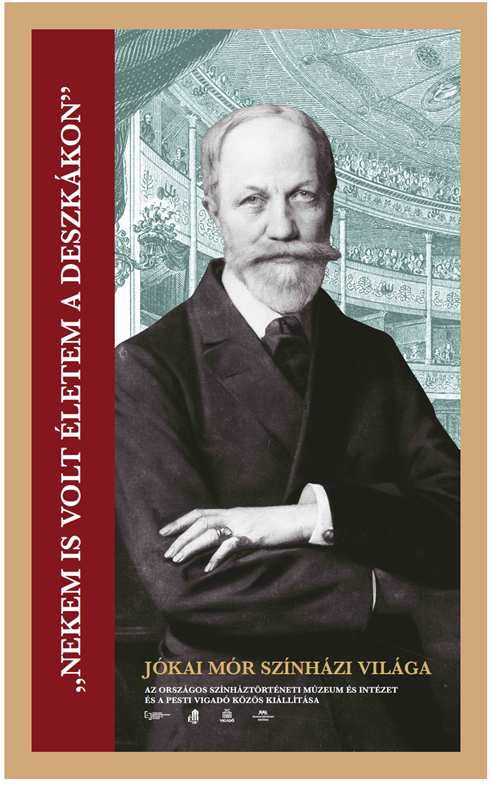
Picture 1. The opening panel of the exhibition (Visual design: Andrea Fecsó)
Looking back on Jókai’s stage career, we can probably agree with Kálmán Mikszáth, who believed that the writer “[a]lways longed for stage success more than anything else. He loved noisy triumphs. The appreciation sown in the wake of narrative works grows slowly and unnoticed, like aloe, and only blossoms at the end of life. A drama matures into a leafy palm tree in an hour, and it bears its dates already there in the lights.”1 Between 1853 and 1894, Jókai wrote the stage adaptations of eleven of his short stories and novels, which were eagerly included in the repertoires of theatre companies in the capital and the countryside. In addition to the plays that filled an entire evening, his occasional plays and poems written for theatre anniversaries and the inauguration of newly built theatres also gave the writer the opportunity to experience the audience’s appreciation firsthand. Writing theatre reviews for the Vasárnapi Ujság under the pseudonym Márton Kakas, he also indirectly educated and recruited an audience for the National Theatre. His personal life was also interwoven with the theatre, as he married an actress on both occasions. As the Prince of Writers and a public figure, he spent almost his entire life on the “public stage.”
In our exhibition we have explored these themes. When compiling the tables, we considered it important that in addition to biographical details, events, and performances related to Jókai in the 19th century, later 20th-century performances of Jókai’s plays should also be included, since, according to contemporary reports, many of our great actors gave memorable performances in them. The rich source material preserved in the collections of OSZMI provided us with the opportunity to illustrate this extensive period appropriately. The works of art, lithographs, photographs, theatre programmes, manuscripts and moving image excerpts featured in the exhibition are accompanied by quotations from Jókai and excerpts from the writings of his contemporaries, which together—as our concept envisions—evoke Jókai’s theatrical world for visitors.
In the short texts below, we have summarised the background material of the thematic units in the exhibition, each illustrated with a typical photo.
Historical tragedies
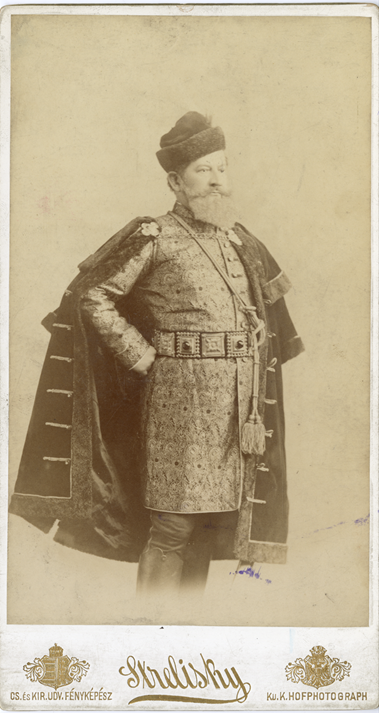
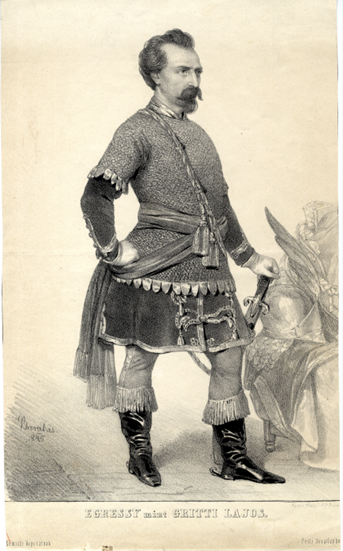
During his career, Jókai tried his hand at almost every theatrical genre. His first two plays, Két gyám [Two Guardians] (1846) and A földönfutó (The Wanderer; 1850), belonged to the genre of popular folk plays that were popular at the time, but were dropped from the repertoire after their premiere. The historical tragedies written between 1850 and 1860 had a greater resonance with the public (Dalma, 1852; Manlius Sinister, 1853; Könyves Kálmán [Coloman the Learned], 1855; Dózsa György [György Dózsa], 1857; A szigetvári vértanúk [The Martyrs of Szigetvár], 1860). The audience, disheartened by the failure of the lost War of Independence and the oppression, watched with enthusiasm the wonderful stories of self-sacrificing heroes fighting for the happiness of the nation. Although critics have on several occasions accused Jókai of violating the strict laws of tragedy in his plays, audiences of the time were not concerned. The unlikely twists of the plot, expressive acting, and poetic language rich in imagery proved sufficient for resounding success. The role portraits that have come down to us from that era testify to the fact that ornate, elaborate costumes were considered the main tools for creating theatrical effect.
Of all the historical dramas, A szigetvári vértanúk had the longest stage career, being performed until the end of the 19th century. However, as political circumstances changed, Jókai’s historical tragedies slowly lost their relevance and, with it, their stage.
Picture 2. Béla Bercsényi as Zrínyi in the stage adaptation of Mór Jókai’s A szigetvári vértanúk (The Martyrs of Szigetvár), National Theatre, January 5, 1894. (Photo: Strelisky)
The theatre insider and the theatre critic
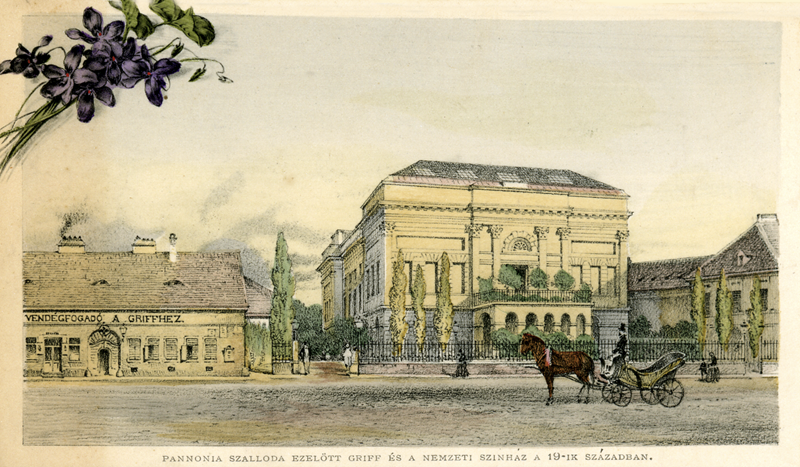
Jókai was well acquainted with the inner workings and relations of the National Theatre, as well as the behind-the-scenes secrets through his wife, Róza Laborfalvi. He collected these experiences in his book A hajdani Nemzeti Színházról (About the former National Theatre). The anecdotes do not only reveal interesting facts such as “the site on which the National Theatre was built was once a Turkish cemetery,”[1] but also give us an insight into the interior design of the theatre, the theatre-going habits of the time, the composition of the audience, and the acting of Hungarian and foreign actors performing at the National Theatre.
Jókai saw the primary purpose of the theatre—being on the side of liberal theatre politics—in the dissemination of national language and culture. He sought to serve this purpose with his theatre reviews, which appeared in the widely read Vasárnapi Ujság newspaper from 1856 onwards, in which he, assuming the persona of Márton Kakas, a villager, viewed all elements of the theatrical performance with naive amazement. The resulting humorous insights and explanations were intended to familiarise the public with the theatre genres and actors, and to stimulate interest in theatre. “Opera is, my Christian brothers, when a man utters this short phrase, ‘Bring me a bottle of wine!” in this manner: ‘Bri-i-i-ing me-e-e- a-a-a bo-o-o-ttle o-o-of wi-i-i-i-i-ne.’”[2]
Although humour often took the edge off criticism, critical remarks about programming policies that favoured opera over drama or the lack of professional management were serious issues that Jókai had to address.
Picture 3. The Griff Inn and the National Theatre in the 19th century (OSZMI Topographical Collection)
Picture 4. Gábor Egressy as Lajos Gritti in Ede Szigligeti’s Gritti, National Theatre, April 19, 1845 (drawing by Miklós Barabás, 1845)
The premiere of Az arany ember (The Man with the Golden Touch) at the National Theatre
“I must admit that for me, this is my favourite novel. […] I also wrote a play based on it, and it is my only play that has remained in the repertoire for twenty years.”[3] Although Jókai in his reminiscences considered more than one of his novels to be his “favourite,” Az arany ember occupies a distinguished place in his oeuvre in several respects. The adventurous story of the Danube boatman was “brought to life” on the stage of the National Theatre in 1884. The spectacular sets, made based on the author’s direction, evoked the world of the novel. The stage version retained the main characters and plot of the story, and director Ede Paulay also participated in the finalisation of the script. Thanks to his theatrical experience, the performance became more fast-paced and had an effective ending: Timár, returning in Turkish disguise, removes all obstacles from Timea’s path to complete happiness.
The premiere was a huge success. The audience received the performance with great enthusiasm: Jókai was applauded nineteen times in front of the curtain and the actors were also celebrated with a huge ovation.
The legendary success of the show was not forgotten. Az arany ember remained in the National Theatre’s repertoire for more than fifty years.
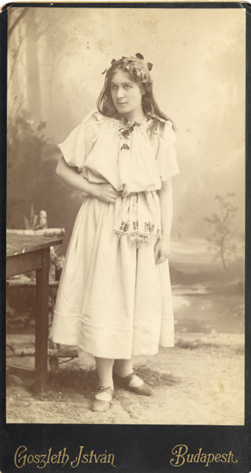
Picture 5. Szeréna Fáy as Timea in the stage adaptation of Mór Jókai’s novel Az arany ember (The Man with the Golden Touch), National Theatre, December 3, 1884. (Photo: István Goszleth)
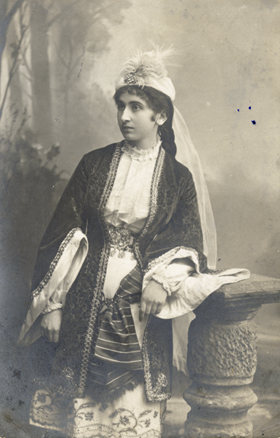
Picture 6. Emília Márkus as Noémi in the stage adaptation of Mór Jókai’s novel Az arany ember (The Man with the Golden Touch), National Theatre, December 3, 1884. (Photo: István Goszleth)
Occasional poems and plays
As a mark of respect for the Prince of Writers, Jókai was often asked to write occasional poems, i.e., prologues, or plays, for theatre anniversaries and opening ceremonies. Their theme and style were more in line with the conventions that had developed up to that point, with little room for the writer’s ingenuity. In most of the prologues, the theatre is presented as a sacred place where vivid images of the glorious past inspire patriotic spirit and national culture. The reality, however, was often different from this ideal. The light-hearted, entertaining shows put on by the commercially oriented provincial companies did not always serve higher cultural and moral goals. Jókai expressed his disappointment through a reference made to this perverse situation in his prologues for the opening of the theatres in Pápa and Pozsony.
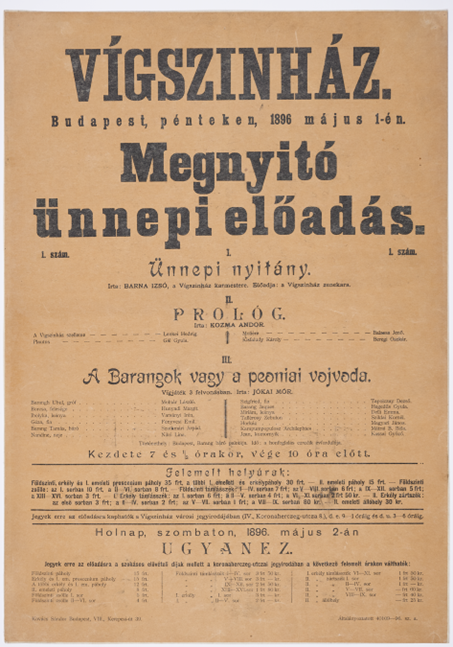
Jókai, the “oldest festive prologue-cobbler,” deviated twice from the tradition of occasional playwriting, but neither of his attempts was successful; tradition proved stronger. His play for the centenary of professional Hungarian theatre acting, titled Thespis kordéja (Thespis’ Cart), was not performed because it revealed with excessive honesty “all the miseries of the first troupe of actors, their struggle with poverty and shame.”[4] In his three-act comedy, A Barangok (The Barangs), presented at the opening ceremony of the Vígszínház, he drew a satirical portrait of the Millennial Hungarian nation, but the celebrating genteel audience did not want to recognise themselves in the mocking reflection, so the play was taken off the programme after a few performances.
Picture 7. The opening performance of the Vígszínház – Mór Jókai: A Barangok, vagy a peoniai vojvoda (The Barangs, or the Voivoda of Peonia), May 1, 1896. (OSZMI Theatre Programme and Small Print Library)
Novel adaptations
In the last third of the 19th century, Jókai’s stage works, based on his novels and short stories, were aimed at a large audience that liked spectacular and entertaining plays. However, none of them matched the success of Az arany ember. Of his novel A kőszívű ember fiai (The Baron’s Sons), only his play titled Keresd a szíved, which highlights the storyline of Richard Baradlay, received significant acclaim at the Buda Theatre Circle in 1896.
With Jókai’s death, his dramatisations also slowly faded into oblivion. In the period between the two world wars, Sándor Hevesi’s reworkings enjoyed considerable public success. For example, his play based on Jókai’s novel Az új földesúr (The New Landlord) reached its fiftieth performance at the Hungarian Theatre in 1916. According to the description in Szinház és Divat, Hevesi’s method consisted of nothing more than “condensing Jókai’s magnificent characters and explosive scenes into concise, unified stage images, leaving out, of course, everything that fell outside the spatial and temporal limitations of the stage.”[5]
Following nationalisation, various versions of Jókai’s novels have been performed on Hungarian stages, often side by side, right up to the present day. Most of them retold Jókai’s works, which have become classics, adapting them to the tastes of contemporary audiences, so that in addition to prose adaptations, Jókai’s stories also conquered the musical stage. We also find examples where adaptations were created for a narrower audience, such as young people, or where the profile of a particular theatre became decisive in the dramaturgical work. For example, the State Déryné Theatre, which travels around villages performing public education functions, has brought almost all of Jókai’s major novels to life in the form of live theatrical picture books.
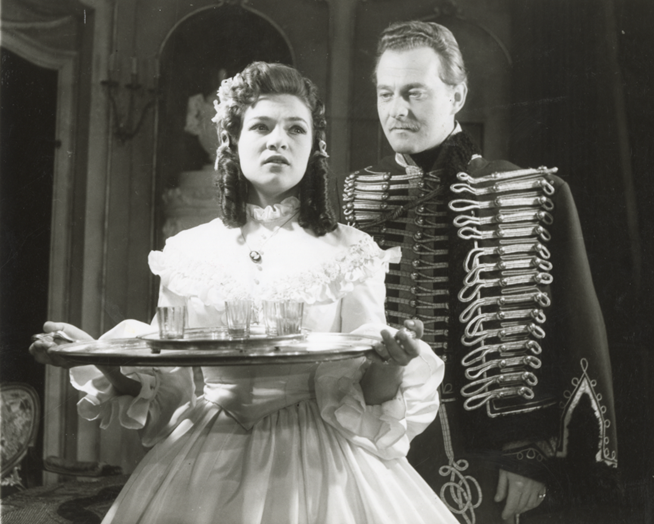
Picture 8. Éva Vass (Edith Liedenwall) and Jenő Pataky (Richárd Baradlay), Ifjúsági Színház (Youth Theatre), December 10, 1953 (Photo: Magyar Fotó – Éva Keleti)
Mór Jókai’s social engagement
Although Jókai took up the pen instead of the sword and did not lose his life on the battlefield, he became a symbol of the 1848–1849 Revolution and War of Independence as one of the Youths of March. He recorded his memories of this period in his volumes Forradalmi és csataképek (Revolutionary and Battle Pictures; 1850) and Egy bujdosó naplója (Diary of a Fugitive; 1850).
One of the most famous moments of 15 March took place at the National Theatre, where the play Bánk bán was performed that evening. On the stage, Jókai gave an impromptu speech, and then Róza Laborfalvi, dressed as Gertrudis, stepped forward and pinned a national cockade to his chest.
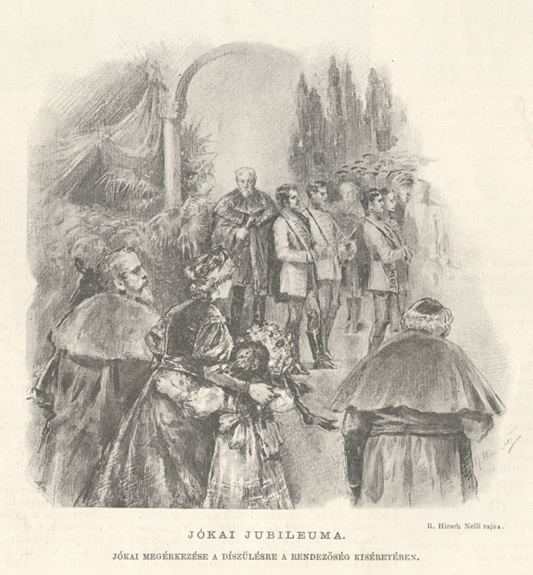
One of the most important institutions of the second half of the 19th century was the newly opened Pesti Vigadó in 1865. Jókai attended many of its events, including balls, and concerts, sometimes even as an organiser. One of the tableaus of the exhibition, Jókai Mór írói jubileuma a Vigadóban (Mór Jókai’s Literary Jubilee at the Vigadó), shows the large-scale celebration organised in honour of Jókai in January 1894. The Vasárnapi Ujság newspaper reported that “everyone was there, from the government, public figures, scientists, artists, representatives of Hungarian women, to children.”[6]
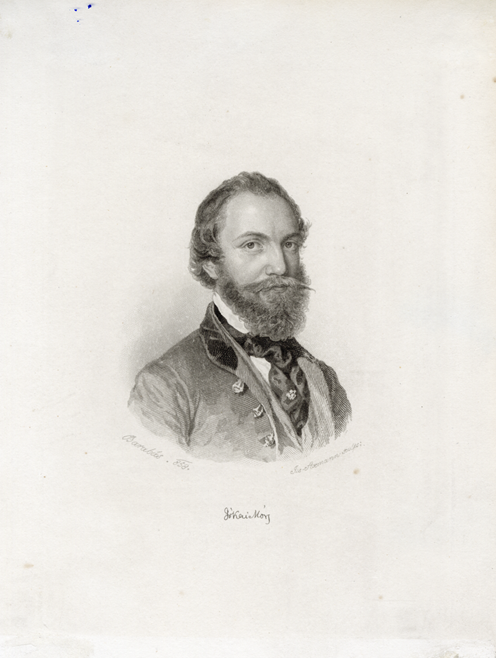
Picture 9. Portrait of Mór Jókai (etching by J. Axmann after Miklós Barabás, 1858)
Picture 10. Greeting Mór Jókai at the Vigadó (drawing by Nelli H. Hirsch on the front page of the January 14, 1894 issue of the Vasárnapi Ujság)
Mór Jókai’s wives
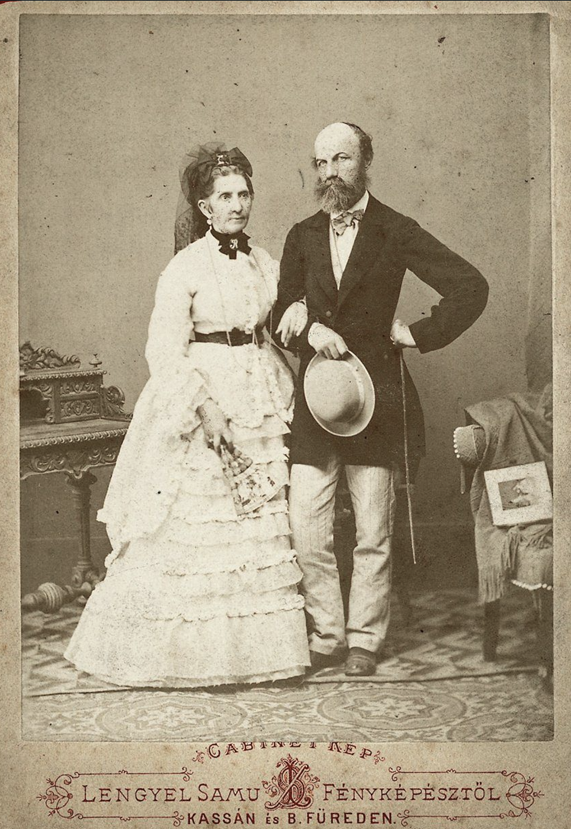
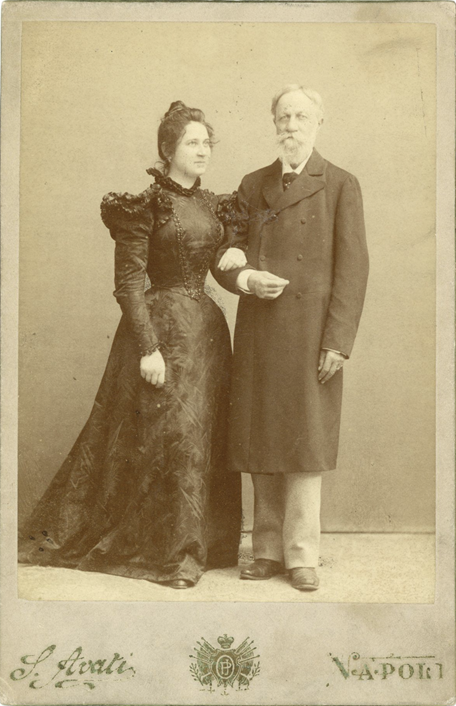
Jókai was also closely connected to the theatre in his private life. He married twice, and both times he married an actress: In 1848, Róza Laborfalvi, the celebrated star of the time, and in 1899, Bella Nagy, who was just starting her career. On stage, the actresses played leading roles in Jókai’s plays, and we can also recognise them in important female characters in several of his novels. Róza, for example, inspired Erzsike in A tengerszemű hölgy (Eyes like the Sea) and actress Judit Hargitay in Politikai divatok (Political Fashions), while Bella’s qualities can be discovered in the character of Eszta in Öreg ember nem vén ember (An Old Man is No Fool).
The acting career of the young Róza Laborfalvi took off in 1837, and after the events of 1848, when she married Jókai, their names became forever linked. Their marriage lasted until the actress’s death in 1886.
In 1899, Mór Jókai married Bella Nagy, who was fifty-four years younger than him, and whom he had met while she was a pupil of Szidi Rákosi. A mentor-student relationship developed between the writer and the girl, which eventually blossomed into love and culminated in a happy marriage. Bella remained faithful to her spouse even after Jókai’s death, and although she was very young, she never remarried.
Picture 11. Mór Jókai and Róza Laborfalvi at Balatonfüred (Photo by Samu Lengyel, 1873; source: Jókai 200 szabadon, MNMKK)
Picture 12. Mór Jókai and Bella Nagy in Naples (Photo by Studio Sante Avati, 1899; source: Jókai 200 szabadon, MNMKK)
Kálmán Mikszáth, in his essay Jókai Mórok (Mór Jókais), written for the writer’s 50th anniversary, listed the areas in which Jókai excelled. About Jókai, the writer, editor, politician, winemaker, and astronomer, he tried to unravel the mystery of how one person could fit so many roles into his life. And in his monograph on Jókai, Mikszáth pondered whether theatricality—the ability to play roles—had become part of Jókai’s nature. Of his enigmatic personality, the author wrote, “it was almost astounding that he did not seem to notice his own glory. Many people thought it was a pretence, a theatrical mannerism to hide his true nature. It seemed likely, but if he was putting on an act, he played it so well that it must be taken as true, because if the cat is never out of the bag while the bag lasts, it must be assumed that there was no cat in it.”[7] We hope that our exhibition has served to deepen the question.
“I too had a life on the boards” – The theatrical world of Mór Jókai
Opening: Pesti Vigadó, May 15, 2025.
Curators: Beáta Huber and Erika Zsuzsanna Kiss
Visual designer: Andrea Fecsó
[1] Jókai, Mór. 1900. A hajdani Nemzeti Színházról. Published by Magyar Elektronikus Könyvtár (Hungarian Electronic Library).
[2] Márton Kakas at the theatre, Letter IV: William Tell, opera by Rossini. Vasárnapi Ujság, June 22, 1856.
[3] Jókai, Mór. 1895. Színművek. Published by Magyar Elektronikus Könyvtár (Hungarian Electronic Library).
[4] Quoted by István Fried, see the relevant description at https://irodalmiszemle.sk/2021/04/fried-istvan-kassa-irodalma-az-irodalmi-kassa-marai-sandor-irasaiban (last visited: October 30, 2025).
[5] Szinház és Divat, December 10, 1916.
[6] Vasárnapi Ujság, June 14, 1894.
[7] Kálmán Mikszáth, 1894, in Kálmán Mikszáth. 1907. Jókai Mór élete és kora. Published by Magyar Elektronikus Könyvtár (Hungarian Electronic Library).